Complete Vaccination Schedule for Indian Children 2026
A calm bedroom environment, elevated rest, and simple hydration help soothe nighttime autumn coughs.
As a paediatrician practicing in Mohali for over two decades, one of the most common questions I get from anxious parents is about the changing vaccination schedules. [DOCTOR TO PERSONALIZE: Add a brief anecdote about a recent parent interaction regarding vaccine confusion]
Vaccines are the most effective way to protect our children from life-threatening diseases. The Indian Academy of Pediatrics (IAP) regularly updates its immunization schedule to provide the best possible protection, considering the epidemiology of diseases in India. The 2026 guidelines bring some important updates that all parents should be aware of.
Why Do Vaccination Schedules Change?
Science is always evolving. As we gather more data on vaccine efficacy, waning immunity, and disease prevalence in India, the IAP Advisory Committee on Vaccines and Immunization Practices (ACVIP) refines the schedule. This ensures your child gets the right vaccine at the right time for maximum protection.
The Recommended IAP Vaccination Schedule for 2026
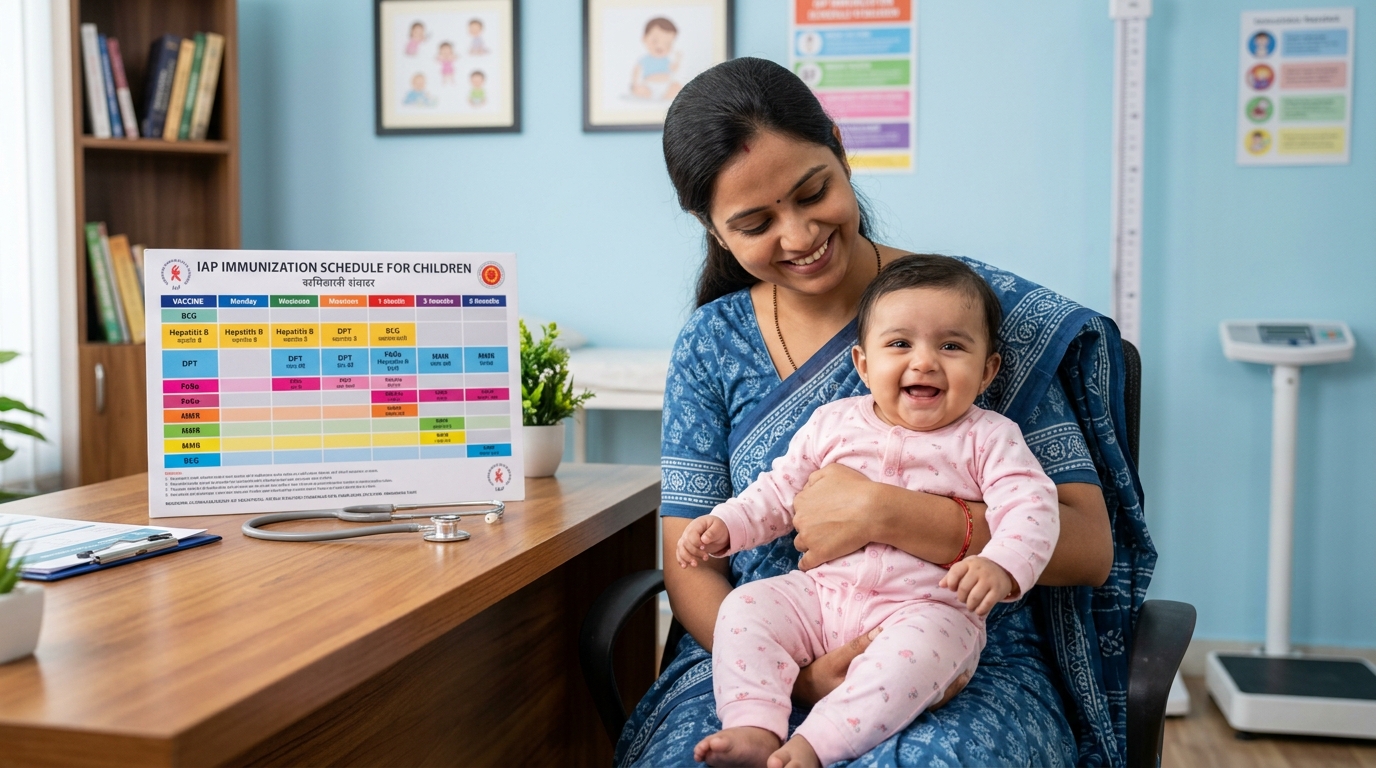
Here is a simplified breakdown of the recommended vaccines from birth to adolescence.
At Birth
- BCG: Protects against severe forms of Tuberculosis.
- OPV 0: Oral Polio Vaccine zero dose.
- Hepatitis B 1: The first dose to prevent Hepatitis B infection.
6 Weeks
- DTwP / DTaP 1: Diphtheria, Tetanus, and Pertussis (whooping cough). (Painless vs painful options are available – discuss with your paediatrician.)
- IPV 1: Inactivated Polio Vaccine.
- Hepatitis B 2: Second dose.
- Hib 1: Haemophilus influenzae type B.
- Rotavirus 1: Protects against severe diarrhea.
- PCV 1: Pneumococcal Conjugate Vaccine (protects against pneumonia and meningitis).
10 Weeks
- DTwP / DTaP 2, IPV 2, Hib 2, Rotavirus 2, PCV 2
14 Weeks
- DTwP / DTaP 3, IPV 3, Hib 3, Rotavirus 3, PCV 3
6 Months
- Typhoid Conjugate Vaccine (TCV): A single dose now provides long-lasting immunity against typhoid fever, which is highly endemic in India.
- Influenza (Flu) Vaccine 1: Highly recommended, especially before the monsoon and winter seasons. Requires two doses 4 weeks apart in the first year.
9 Months
- MMR 1: Measles, Mumps, and Rubella.
- Meningococcal Vaccine: [VERIFY: Check latest 2026 IAP stance on universal vs high-risk recommendation for MenACWY at 9 months]
12 Months
- Hepatitis A 1: Preferably the single-dose live attenuated vaccine or first dose of the inactivated vaccine.
15 Months
- MMR 2: Second dose.
- Varicella (Chickenpox) 1
- PCV Booster
16 to 18 Months
- DTwP / DTaP Booster 1, IPV Booster 1, Hib Booster 1
4 to 6 Years
- DTwP / DTaP Booster 2, IPV Booster 2, MMR 3
- Varicella 2: Second dose for complete protection.
10 to 12 Years (Pre-Teens)
- Tdap / Td: Booster for Tetanus, Diphtheria, and Pertussis.
- HPV (Human Papillomavirus): Crucial for both girls and boys to prevent cervical and other cancers. A two-dose schedule is recommended if started before 15 years of age.
A Note on "Painless" vs "Painful" Vaccines
One of the most frequent dilemmas parents face in my clinic is choosing between whole-cell pertussis (DTwP - "painful") and acellular pertussis (DTaP - "painless") vaccines. While DTwP is known to cause more fever and local pain, it is generally believed to offer a slightly longer duration of immunity. However, DTaP is much better tolerated. We can discuss what is best for your child during your visit.
Catch-up Vaccination
Did you miss a dose? Don't panic. The "catch-up" schedule allows us to administer missed vaccines safely. Never assume it's "too late" to vaccinate your child.
Disclaimer:
This blog post is for informational purposes only and does not substitute for professional medical advice. Always consult with your paediatrician for a vaccination schedule tailored to your child's specific health needs and medical history.
Medical Disclaimer: This content is for general educational purposes only and does not substitute for professional medical advice, diagnosis, or treatment. Always consult your doctor for personal medical guidance, vaccines, or medications.